Review and share · 7 min
Use reports and analytics
Turn posted activity into financial statements, cash analysis, and operating context.
Before you start
Post the reviewed entries for the period and reconcile important cash, receivable, payable, and tax accounts. Draft activity does not belong in formal report balances.
Run and interpret a report
- Open Reports in the active company and choose the report that answers the question.
- Set the reporting date or period before reading any amount.
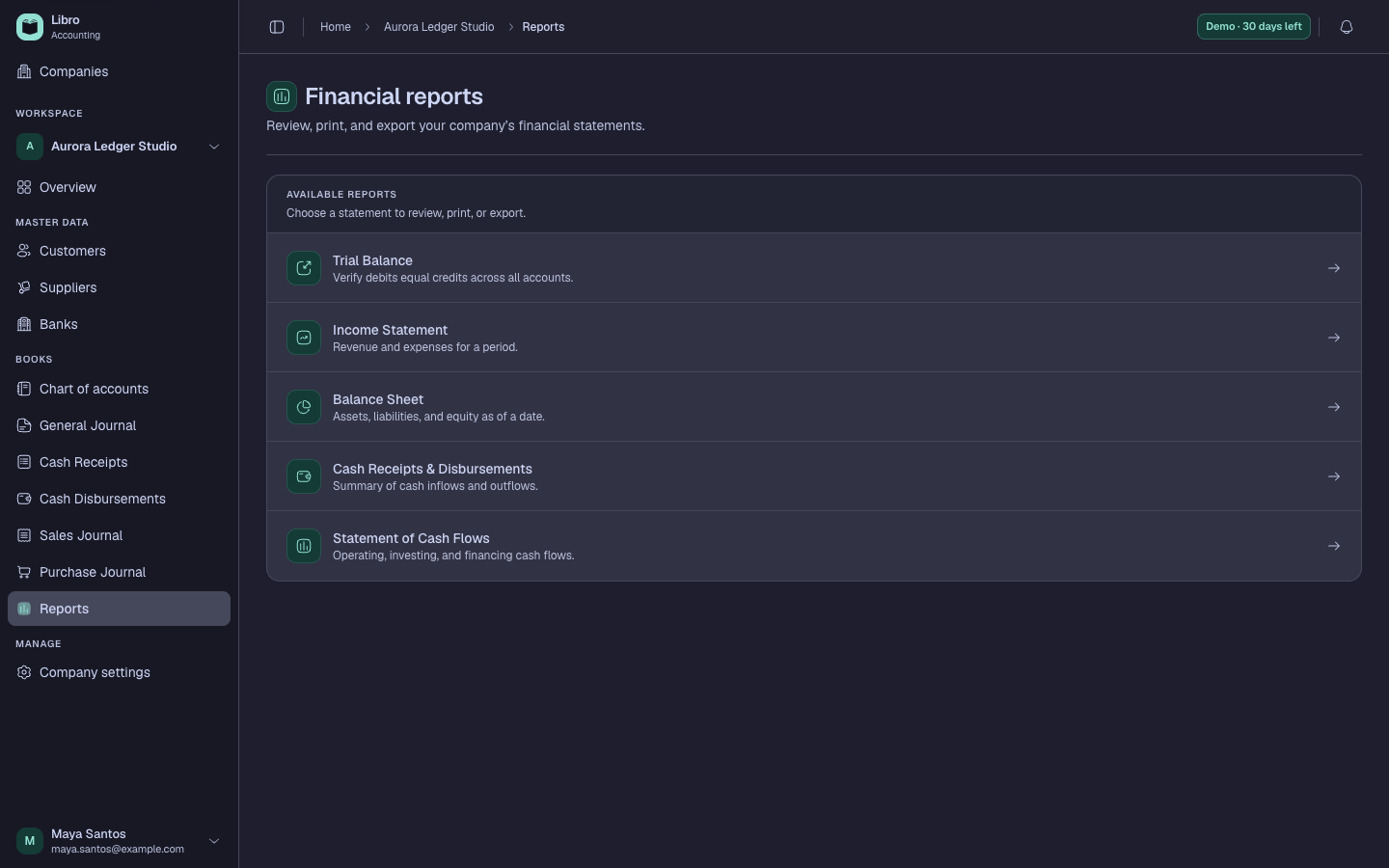
- Use the Trial Balance to check debit-credit agreement and account balances at a cutoff.
- Use the Income Statement for performance, Balance Sheet for position, and Statement of Cash Flows for cash movement by activity.
- Use cash receipts and disbursements analysis to group cash movement by counterpart account and separate cash-to-cash transfers.
- Drill from an unexpected amount into the related ledger and source record.
- Compare the formal report with Overview only after matching company, date range, accounting method, and status scope.
Check your work
The Trial Balance should agree, statement relationships should reconcile, and every material amount should be traceable to a ledger and source record for the same period.
Common mistakes
- Comparing a point-in-time Balance Sheet with a period-based Income Statement without checking dates.
- Expecting Draft records to appear in formal balances.
- Using dashboard trends as the signed or filed report.